
Top Tips for Choosing the Best Asphalt Mixing Plant?

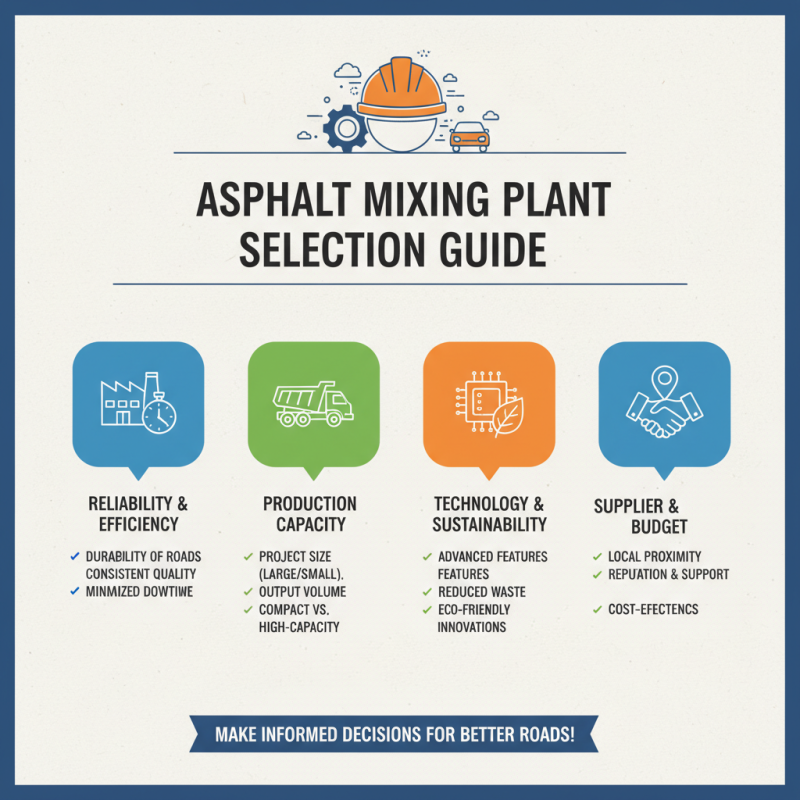
Choosing the right asphalt mixing plant is crucial for any construction project. The quality of asphalt produced can significantly affect the durability of roads and highways. Not all plants are created equal, and various factors come into play. Reliability and efficiency are critical components to consider.

One must evaluate the plant's production capacity. A higher capacity plant may yield better results for larger projects. However, smaller projects might benefit from compact models. Additionally, consider the technology employed in the asphalt mixing plant. Advanced features can enhance the quality of the mix, reducing waste and improving sustainability.

Evaluating local suppliers is essential, too. Proximity can influence delivery times and support services. It's vital to ensure that the supplier has a reputation for quality and reliability. Investing time in research and understanding can lead to a well-informed decision. Aspects like budget and project requirements must also be reflected upon. This careful consideration can lead to better outcomes in your construction endeavors.
Top Tips for Choosing the Best Asphalt Mixing Plant?

Understanding Different Types of Asphalt Mixing Plants Available

When selecting an asphalt mixing plant, understanding the different types available is crucial. There are two main categories: batch plants and drum plants. Batch plants mix asphalt in batches, allowing for precise control over the quality. This method is ideal for projects requiring multiple asphalt formulations. However, it tends to be slower and may lead to delays in production.

On the other hand, drum plants continually mix asphalt. This type is more efficient for large-scale operations. The process is straightforward but offers less flexibility in adjusting the mixture. Additionally, some newer models have innovative features, like recycling capabilities. These can appeal to environmentally conscious projects but might come with a higher price tag.

Choosing the right type depends on project requirements and budget constraints. Consider where the plant will operate. Different climates and site conditions can affect performance. Evaluate your team's expertise in operating specific types of plants, as this can impact safety and efficiency. Often, the best choice is a balance between technology, capacity, and practicality. Don't overlook the training a new plant may require. An investment in expertise is as vital as the purchase itself.

Asphalt Mixing Plant Type Description Advantages Disadvantages Best Use Case
Batch Asphalt Mixing Plant Produces asphalt in batches, allowing for precise control over the mix. High quality mix, flexibility for different mixtures. Higher production time per cycle, less efficient for large projects. Suitable for small to medium-sized projects that require quality control.
Continuous Asphalt Mixing Plant Produces asphalt continuously, ideal for large volume projects. High production rate, lower operational costs. Less control over the mix quality, limited flexibility. Ideal for large-scale projects requiring high output.
Mobile Asphalt Mixing Plant Portable plants that can be easily transported to different job sites. Flexibility, reduced transportation costs. Limited production capacity, may require setup time. Best for temporary projects and remote locations.
Recycling Asphalt Mixing Plant Focuses on utilizing recycled asphalt material. Environmental benefits, cost-effective. Potential quality issues if not managed properly. Suitable for eco-friendly projects and budget constraints.

Assessing Production Capacity and Output Quality of Asphalt Plants

When selecting an asphalt mixing plant, assessing production capacity and output quality is crucial. A plant’s production capacity should align with your project demands. Evaluate how much asphalt the plant can produce per hour. Higher capacity may seem appealing, but a balance is necessary to avoid overproduction, which can inflate costs.

Output quality directly impacts road longevity. Ensure the plant’s technology supports consistent mix quality. Test production samples to assess performance before making a decision. Inconsistencies in the asphalt can lead to premature road damage. It’s essential to consider how the plant handles various materials. The flexibility to adapt to different mixes can enhance your project's success.

Reflecting on previous experiences can guide your choice. Some plants may offer high throughput but struggle with quality. Others excel in providing consistent mixes but operate at lower capacities. Understanding these trade-offs can help you make a more informed decision. Seek feedback from industry professionals to assess the reliability of different setups.

Production Capacity and Output Quality of Asphalt Mixing Plants

Evaluating Energy Efficiency and Environmental Impact

When selecting an asphalt mixing plant, energy efficiency and environmental impact stand out as crucial factors. A well-designed plant can significantly reduce energy consumption. Look for features like advanced burner technology and heat recovery systems. These innovations can minimize fuel use and cut emissions.

The environmental impact goes beyond mere emissions. Consider the entire lifecycle of the plant, from production to decommissioning. Some mixing plants may have higher upfront costs, but they often lead to savings in maintenance and operational costs over time. It's essential to evaluate the resilience and durability of materials used in construction. Plants built with sustainable materials contribute to lower environmental footprints.

Although many manufacturers advertise eco-friendly features, it's vital to verify these claims. Seek third-party certifications or case studies that illustrate real-world performance. Understanding local regulations can also guide your choice. It can be challenging to navigate these requirements, but this knowledge will foster informed decisions. A careful assessment is necessary to ensure compliance and mitigate environmental impacts effectively.

Key Features to Look for in Modern Asphalt Mixing Plants

When choosing an asphalt mixing plant, certain key features can significantly enhance your decision-making process. Modern plants should prioritize efficiency and production rate. Look for systems with advanced automation features that optimize workflow. These systems reduce manual oversight and minimize errors, increasing overall productivity. Efficient mixing technology ensures that asphalt is consistently uniform, improving the quality of your end product.

Another vital aspect is mobility. A portable asphalt mixing plant allows for flexibility in diverse job sites. These plants should also boast robust build quality to withstand harsh conditions. Operator safety features are equally important; easy access to maintenance points can prevent accidents. Additionally, control systems should be user-friendly, allowing operators to monitor the plant with ease.

Environmental considerations are becoming increasingly relevant. Choose plants with emission control technologies that minimize harmful outputs. This not only ensures compliance with regulations but also promotes sustainability in your operations. Reflecting on these aspects can reveal areas for improvement in your current operations. Balancing efficiency, mobility, and environmental responsibility leads to a more effective asphalt mixing solution.

Considering Budget and Total Cost of Ownership for Asphalt Plants

When selecting the best asphalt mixing plant, budget and total cost of ownership are crucial factors. An asphalt plant's initial investment isn't the only financial consideration. According to the National Asphalt Pavement Association, operational costs typically account for around 70% of the total cost of ownership over the plant's lifespan. This emphasizes the importance of evaluating both performance and operating expenses.

It's essential to analyze fuels and energy consumption, as they significantly impact daily costs. Some plants are designed for energy efficiency, which can result in substantial savings over time. Reports indicate that switching to more efficient technologies can reduce fuel costs by 20% or more. This translates into real savings, allowing you to allocate funds elsewhere.

Tips to consider include assessing the availability of replacement parts. If a plant’s components are hard to find, maintenance costs may soar. Opting for models with widespread parts availability can ease this burden. Additionally, consider the plant's location. Transportation costs can add up quickly, affecting your overall budget. Prioritize plants that balance purchase cost with long-term financial implications.