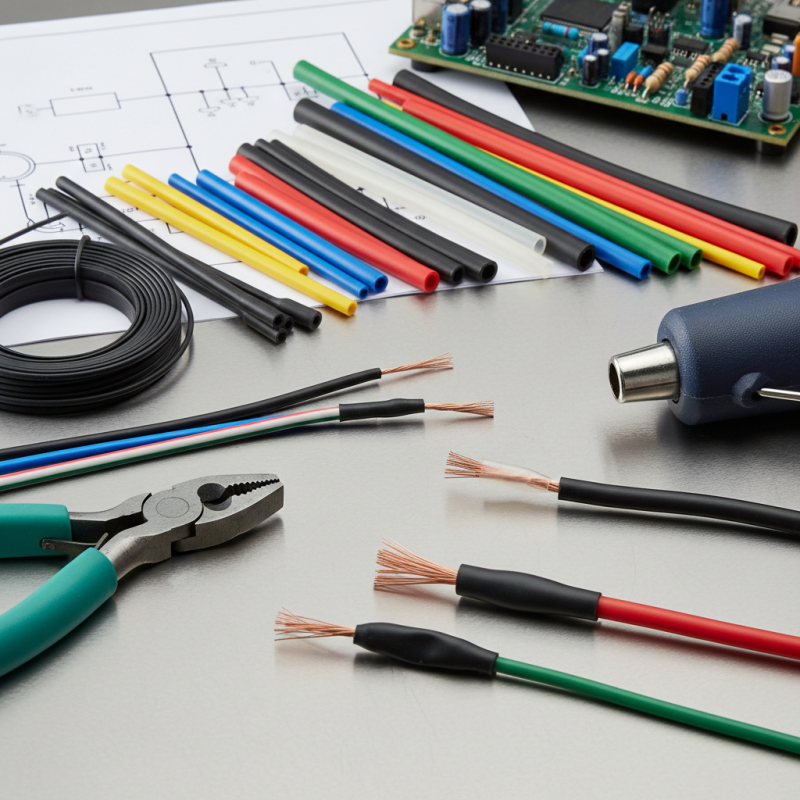
How to Choose the Best Heat Shrink Tube for Your Projects?
Choosing the right Heat Shrink Tube is essential for any project involving electrical insulation or protection. These tubes offer reliable performance and durability. They come in various sizes, colors, and materials, making your selection critical.
When selecting a Heat Shrink Tube, consider the heat rating and shrink ratio. This helps ensure proper fit and function. It can be a challenge to match the right tube to your specific needs. Misjudging the size can lead to project setbacks.
Additionally, the environment in which the tube will be used matters. Some tubes resist chemicals better than others. Reflecting on past projects may help refine your choices. Your experience can guide you toward more effective materials. With careful thought, you can enhance the quality and longevity of your work.
Understanding Heat Shrink Tubing: Types and Materials Explained
Heat shrink tubing is a versatile solution for various projects. Understanding its types and materials is crucial. Polyolefin is the most common material. It offers excellent insulation and flexibility. Data from industry reports highlight that polyolefin can withstand temperatures of 125°C, making it suitable for diverse applications. The heat shrink ratio of 2:1 or 3:1 is significant, allowing it to fit a range of wire sizes.
Another option is PVC tubing. Though more affordable, it has limited temperature resistance. Reports show that PVC can handle up to 105°C. This material may not be ideal for all situations. Additionally, consider the thickness of the tubing. Thicker tubes offer better protection but can be more challenging to work with. Understanding the specifics helps avoid common mistakes.
When selecting a heat shrink tube, one must also check the adhesive lining. Adhesive-lined tubing provides superior sealing against moisture. However, it can complicate the application process. It's essential to evaluate the project’s requirements carefully. A hasty choice can lead to problems down the line, including insulation failure or a lack of durability.
Key Factors to Consider: Dimensions and Shrink Ratio Impact
Choosing the right heat shrink tube involves understanding key factors, especially dimensions and shrink ratios. Dimensions, which include diameter and length, are critical for ensuring a snug fit. A fitting that is too tight might not shrink properly, while one that is too loose won't provide adequate insulation.
Shrink ratio plays a vital role too. It indicates how much the tube reduces in size when heated. Common ratios are 2:1, 3:1, and 4:1. For example, a 2:1 ratio means the tube shrinks to half its original size. This flexibility allows for use across various wire sizes. According to industry reports, proper size selection improves insulation integrity by nearly 30%.
Tip: Always measure your components before selecting a tube. This helps avoid errors that could compromise your project.
It’s essential to consider the environment where the tube will be used. Temperature and chemical exposure can affect performance. Some materials may not withstand extreme conditions.
Tip: Test a sample piece if uncertain about suitability. This can save time and resources down the line. Inconsistent material quality can lead to failures. Always be wary of sourcing from unknown suppliers.
Temperature Ratings: Selecting Tubing for Environmental Conditions
When choosing heat shrink tubing for projects, understanding temperature ratings is crucial. Tubing types vary based on their ability to withstand heat. High-temperature environments can damage inferior materials. Always consider the specific conditions your project will face.
Tips for selection: Look for tubing with a higher temperature rating than your project's maximum exposure. This offers a safety margin. Also, check the minimum temperature rating. If the environment goes below this threshold, the tubing may become brittle and lose effectiveness.
Pay attention to the tubing's material too. Some materials perform better in extreme conditions. For example, fluoropolymer offers excellent resistance to heat and chemicals. However, it may not be the easiest to work with, and that’s something to ponder. Consider the trade-offs between flexibility and rigidity, especially for tight spaces.
Application-Specific Considerations: Electrical, Automotive, and More
When choosing heat shrink tubing, understanding specific applications is crucial. In the electrical sector, using the right tubing can significantly enhance insulation and support connectivity. According to a report by MarketsandMarkets, the global heat shrink tubing market is expected to grow by 5.2% annually through 2025. This growth highlights the increasing reliance on heat shrink solutions for safety and durability in various projects.
In automotive applications, heat shrink tubing plays a key role in protecting wire harnesses from the harsh environment. A report from Grand View Research indicated that the automotive application segment accounts for over 30% of the market share. In these scenarios, selecting materials that offer resistance to chemicals, moisture, and temperature extremes is essential. Oversights in choosing the right specifications can lead to premature failures or safety hazards.
In other areas, such as aerospace and medical, the demands are even higher. Tubing must meet strict regulatory standards. For instance, the FDA regulates materials used in medical equipment. This requires careful selection and testing of heat shrink products, which can be a complex process. Making a wrong choice may impact not only performance but also compliance. Careful consideration of application-specific needs is vital for achieving desired results.
Heat Shrink Tube Selection: Application-Specific Considerations
Industry Standards: Compliance and Certifications for Heat Shrink Tubes
When selecting heat shrink tubes, compliance with industry standards is essential. These standards ensure quality and durability. Heat shrink tubes need to meet specific certifications, like UL or CSA, to guarantee performance. Using certified materials helps avoid costly failures. Ensuring compliance protects both your projects and the end users.
Different applications demand varying levels of resistance. Some might require flame resistance, while others focus on moisture protection. Understanding these parameters is crucial. Limited knowledge could lead to improper material selection. It’s vital to study the application environment closely. For example, outdoor projects need tubes with UV resistance, while automotive applications may require higher heat resistance.
While standards provide guidance, choosing the right heat shrink tube often involves trial and error. Personal experience plays a significant role. Testing various options helps in finding the most reliable solution. Feedback from hands-on experience can lead to better understanding. Industry standards serve as a foundation, but real-world applications often reveal their limitations. Reflecting on past choices can enhance future selections.