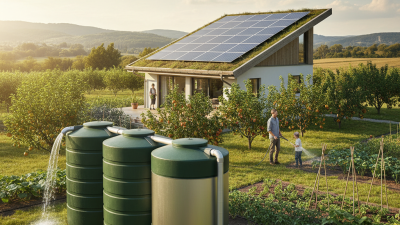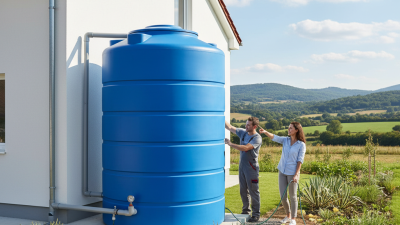
New Zealand buyers need water tanks that suit local rainfall, site access, and intended use. A rural household storing roof-collected water faces different priorities from a farm needing stock supply or a business managing backup capacity. The WHO/UNICEF Joint Monitoring Programme’s 2023 report estimated that 2.2 billion people lacked safely managed drinking water in 2022. That global figure is not a measure of New Zealand supply, but it underscores why safe storage and dependable maintenance matter.
For potable-water applications, buyers should check tank materials, fittings, covers, and cleaning access—not capacity alone. New Zealand’s Ministry of Health drinking-water guidance provides a useful reference for managing water quality. Materials intended to contact drinking water can also be assessed against AS/NZS 4020. Building Code Clause G12 concerns water supplies in buildings; buyers should confirm which requirements apply to their specific installation. Ask manufacturers for relevant test documentation, warranty terms, delivery details, and practical advice on foundations and anchoring.
This guide compares ten manufacturers for NZ buyers, focusing on product range, material options, support, and suitability for different sites. It also considers how imported products may fit local conditions, including narrow rural driveways and exposed coastal locations. Small details count. A large tank is not automatically the best choice. Manufacturer claims deserve checking, and published information can be incomplete; buyers should request written specifications before ordering. For people searching “water tanks nz,” the aim is a grounded shortlist, not a universal winner.
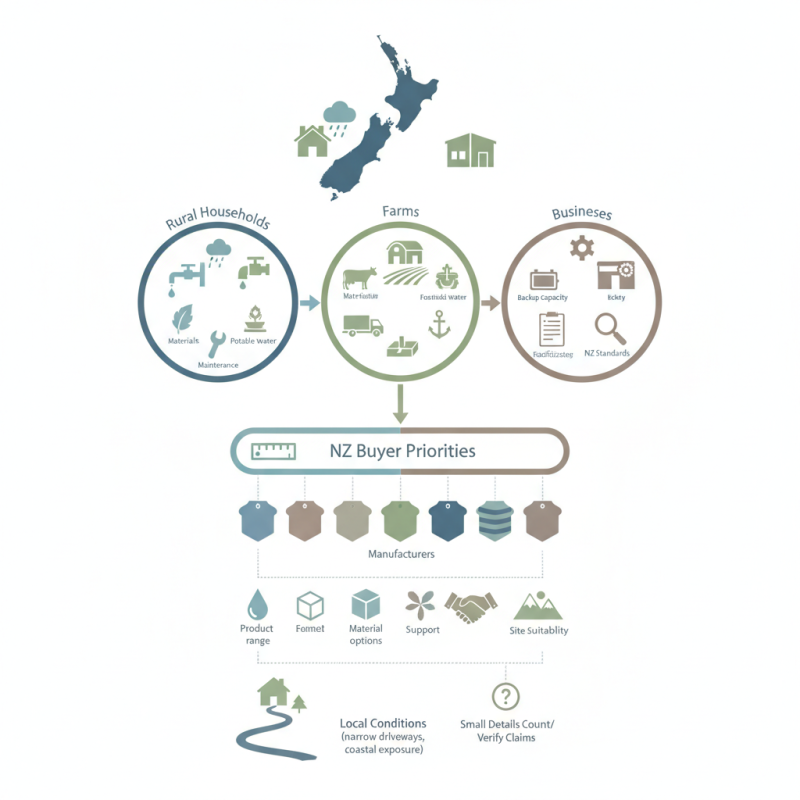
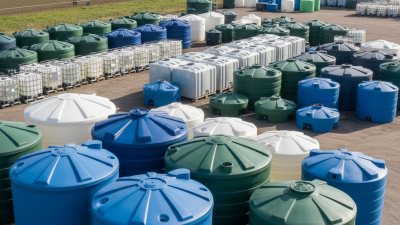
For New Zealand buyers, tank type should match the site and water use. Slimline tanks fit beside narrow homes, while round polyethylene tanks suit larger yards and farm blocks. Concrete tanks can provide substantial storage, but need a suitable base and access for delivery. Underground tanks save surface space; installation costs and maintenance access deserve careful thought.
NIWA’s 1991–2020 climate normals show strong regional rainfall differences:
That contrast matters. A roof-connected rainwater system may support household supply, garden irrigation, or stock watering, but storage needs depend on roof area, local rainfall, household demand, and dry spells. A 25,000-litre tank can feel generous in one location and inadequate in another. Tank sizing is not exact science.
For drinking water, specify a covered tank, screened inlets, and suitable filtration and disinfection. Keep gutters clear of leaves, and check for sediment after heavy rain. Smaller tanks can buffer toilet flushing and garden use without replacing the main supply. Every litre counts. Yet a complicated setup can be harder to maintain; buyers should allow room for inspection and cleaning, not just the tank itself.
For New Zealand buyers, a water tank’s appearance tells little about its long-term performance. The harder questions concern materials, manufacturing controls, and suitability for the intended water supply. Ask what resin or metal grade is used, how UV exposure is addressed, and whether the tank is designed for potable water or rainwater storage. Request current test reports and product drawings, then check that the documents match the model being quoted. A certificate alone is not enough. Confirm its scope and verify local requirements with a qualified reviewer.
Production consistency matters. Ask how the factory checks wall thickness, dimensions, fittings, and leaks, and whether inspection records can be shared. If possible, request dated photos or arrange an independent pre-shipment inspection. No checklist removes every risk; paperwork can be tidy while production varies. That uncertainty deserves attention, not a sales promise.
Also compare practical support, not just unit price. Confirm lead time, export packing, spare fittings, warranty exclusions, and who handles damage claims. Ask for the packed dimensions and weight before estimating freight to New Zealand. A narrow access road or crane limit can change the installation cost. Small details matter. Get answers in writing, especially where a drawing, quotation, and test report describe different specifications.
The ten profiles represent different Chinese water-tank manufacturing strengths, not a verified ranking. One focuses on rotationally moulded polyethylene tanks for farms and homes. Another produces sectional steel-panel tanks for larger sites. A stainless-steel specialist may suit demanding hygiene needs, while a fiberglass producer offers lightweight storage options. Other profiles include insulated tanks for temperature-sensitive use, fire-water storage systems, agricultural tanks, compact domestic units, commercial-scale tanks, and custom-production suppliers. Details matter. Buyers should compare materials, fabrication methods, stated capacity, and available inspection records rather than relying on broad product claims.
For New Zealand projects, ask each supplier for drawings, material specifications, installation guidance, and clear delivery terms. Check whether the proposed tank suits local site conditions, including wind exposure, access for installation, and the stored water’s intended use. Request references for comparable projects where available. A polished catalogue helps, but it cannot replace clear technical documents. Some product pages may leave practical questions unanswered; raise them before placing an order.
Tips: Compare the same capacity and configuration across quotations. Confirm what the price includes, such as fittings, freight, and installation support. Ask how replacement parts and after-sales assistance are handled. Keep answers in writing.
The profiles below describe common Chinese water-tank supplier specializations, not named or independently verified companies, and are not a ranked directory. Product suitability and compliance should be confirmed with each supplier for the intended project.
| Profile | Typical product focus | Common construction | Potential NZ applications | Checks for buyers |
|---|---|---|---|---|
| 1. GRP sectional tank specialist | Modular tanks assembled from glass-reinforced plastic panels | Bolted panels, internal bracing, gaskets and access fittings | Commercial buildings, industrial facilities and sites with restricted delivery access | Request panel and resin specifications, potable-water contact evidence where relevant, installation drawings and structural design information. |
| 2. Stainless-steel sectional tank specialist | Sectional storage tanks for clean water and process use | Welded or bolted stainless-steel panels; grades such as 304 or 316 may be offered | Commercial, industrial and coastal projects, subject to water chemistry and design conditions | Verify the actual steel grade, material traceability, weld quality, corrosion suitability and any required drinking-water test documentation. |
| 3. Bolted glass-fused-to-steel tank specialist | Large-capacity bolted tanks with a glass coating fused to steel panels | Factory-coated steel panels, bolted joints and project-specific liners or sealants | Bulk water storage, wastewater and selected industrial uses | Check coating specifications, repair procedures, chemical compatibility, foundation loads and the scope of engineering documents. |
| 4. Epoxy-coated steel tank specialist | Bolted steel tanks with a protective coating system | Coated steel panels, fasteners, sealants and optional internal liners | Fire-water reserves, process water and other engineered storage applications | Confirm coating type and thickness, edge protection, repair materials, corrosion environment rating and suitability for the stored liquid. |
| 5. Galvanized pressed-steel tank specialist | Modular tanks made from pressed steel panels | Hot-dip galvanized panels, bolted joints and internal support components | Utility and industrial storage where the design and water quality are compatible | Ask for coating and steel specifications, joint details, corrosion protection provisions and evidence of suitability if used for drinking water. |
| 6. Rotomoulded polyethylene tank specialist | One-piece vertical, slimline or transportable plastic tanks | Rotationally moulded polyethylene, with fittings and UV-stabilized grades available from some suppliers | Rural rainwater storage, small sites and applications suited to moulded tank sizes | Verify resin grade, UV performance, tank dimensions, outlet options, transport constraints and potable-water contact suitability where applicable. |
| 7. Fiberglass reinforced plastic tank specialist | Moulded or fabricated tanks for water and compatible chemicals | FRP laminate, with resin and reinforcement selected for the intended service | Industrial water, wastewater or chemical storage after compatibility assessment | Request laminate design, resin identification, chemical-resistance data, fabrication quality records and operating limits. |
| 8. Welded stainless-steel tank specialist | Custom-made cylindrical, rectangular or process tanks | Welded stainless-steel plate, with finish and grade dependent on the specification | Food-related processes, commercial water systems and industrial service where specified | Review weld procedures, inspection records, surface finish, cleaning requirements and the stated material grade. |
| 9. Fire-water storage tank specialist | Tanks configured for fire-protection water reserves | May use bolted steel, coated steel, GRP or other materials depending on project design | Sites requiring dedicated fire-water storage, subject to the project’s fire-engineering design | Confirm usable capacity, outlet and suction arrangements, refill provisions, structural design and acceptance requirements with the project team. |
| 10. Packaged water-system tank supplier | Tanks supplied with selected pumps, controls, pipework or treatment equipment | Tank material varies; package components may be assembled as a coordinated system | Building services, remote sites and applications needing integrated storage and equipment | Clarify system boundaries, component specifications, electrical requirements, commissioning support, spare parts and local service arrangements. |
For New Zealand projects, buyers should assess the applicable building and project requirements, including seismic restraint and site-specific structural design. For tanks or components intended to contact drinking water, request relevant test evidence, such as testing to AS/NZS 4020 where applicable; do not treat a supplier’s general statement as proof of approval.
For New Zealand buyers, tank material should match the site, water use, and maintenance plan. UV-stabilized polyethylene is lightweight and often easier to install on narrow residential sections. Check the tank’s support requirements and whether it is suitable for drinking water. Steel tanks can serve larger storage needs, but coatings and fittings deserve close inspection in coastal areas. Small details matter.
Choose capacity using household demand, roof catchment, and the length of likely dry spells. A large tank may sound reassuring, yet it can be difficult to deliver or place on a steep section. Measure access routes, gates, and turning space before ordering. A neat capacity estimate can still be wrong if seasonal rainfall or actual water use is guessed.
Customization can include inlet and outlet positions, access hatches, overflow connections, and tank dimensions. Ask manufacturers for drawings and confirm that fittings align with existing pipes and pumps. This reduces awkward changes during installation. Not every site is simple. Compare what can be changed without compromising the tank’s stated performance, and verify relevant local requirements with the installer or council.
Importing water tanks from China to New Zealand involves more than comparing factory prices. Confirm the tank’s intended use, capacity, material, fitting sizes, and UV protection before ordering. For polyethylene storage tanks, ask whether the product conforms to AS/NZS 4766; for drinking-water contact, request relevant AS/NZS 4020 test evidence. These standards address different requirements. A general “food-grade” claim is not a substitute for test documents.
Check the landed cost, not just the unit price. Include sea freight, insurance, port charges, customs clearance, and delivery to the final site. UNCTAD’s Review of Maritime Transport 2024 reported that global maritime trade grew 2.4% in 2023 and forecast 2% growth for 2024. Freight timing can still shift. Allow buffer time, especially for oversized tanks that may need special handling. One detail is easy to miss: measure gates, access roads, and the installation pad before confirming dimensions.
Ask suppliers for drawings, material specifications, loading details, and clear photos of tank outlets and seams. Agree on inspection steps before production, and specify how damage or missing parts will be documented. Wooden packaging entering New Zealand may need to meet ISPM 15 requirements; confirm current biosecurity conditions with New Zealand’s Ministry for Primary Industries. A low quote can look attractive, but unclear paperwork often costs time later. Verify the documents with your customs broker before shipment.