China Top 10 Large Water Tank Manufacturers?

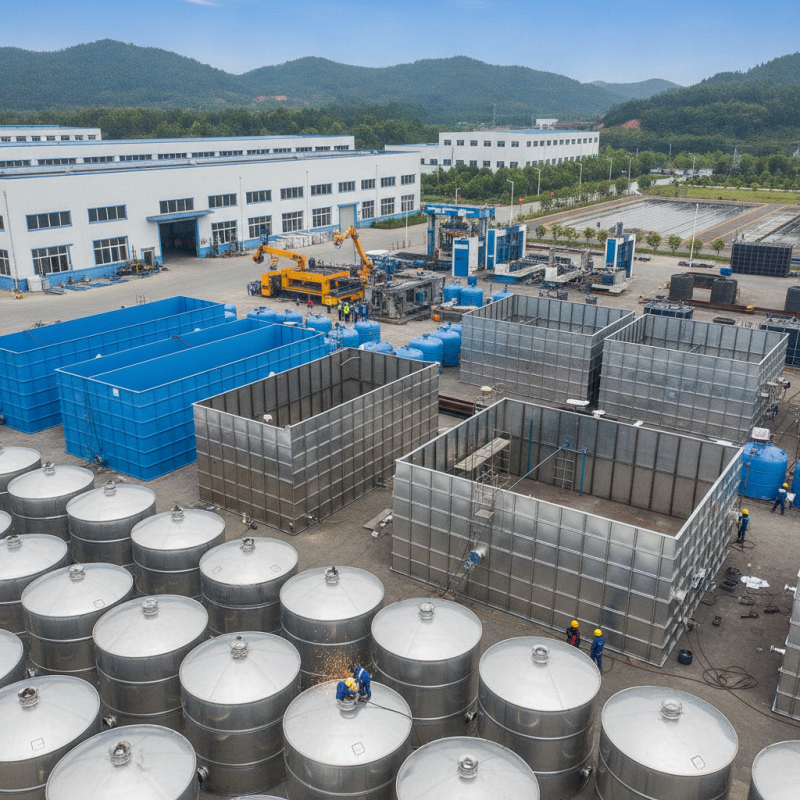
China’s water-storage industry has expanded from basic steel fabrication to engineered systems for factories, farms, buildings, and emergency reserves. This article examines China’s top 10 large water tank manufacturers through practical criteria. Production capacity matters. So does material quality.

We compare stainless steel, galvanized steel, FRP, HDPE, and sectional panel tanks. Each material performs differently under sunlight, pressure, temperature changes, and chemical exposure. A tank holding 500,000 liters needs more than a strong shell. Its foundation, internal coating, inlet, outlet, overflow pipe, and inspection access also require careful review. Water quality can change when design details are ignored.

Water-storage engineer Dr. Martin Keller states, “A large water tank is only reliable when its structure, fittings, and maintenance plan work together.” This principle guides the selection. We consider factory experience, welding or molding controls, testing procedures, certifications, installation support, warranty terms, and export performance. Site photographs and project references can reveal more than a polished catalog.

The ranking is not absolute. Supplier data may change, and some manufacturers publish limited technical information. That is worth noticing. A lower-priced tank is not automatically a poor choice, while a famous brand may still require closer inspection. Buyers should verify panel thickness, coating specifications, load calculations, delivery schedules, and after-sales response before signing a contract. The best manufacturer is not simply the largest one. It is the partner that can deliver safe storage, accurate documentation, and dependable service over many years.
China Top 10 Large Water Tank Manufacturers?

Definition and Role of Large Water Tank Manufacturers in China

Large water tank manufacturers in China are companies that design, produce, and support storage systems for industrial, commercial, agricultural, and emergency water use. Their products may include sectional steel tanks, stainless steel tanks, fiberglass tanks, and polyethylene tanks. A reliable manufacturer does more than fabricate panels. It studies water quality, site conditions, storage volume, temperature, and installation access.

These manufacturers play a practical role in China’s water infrastructure. They help factories maintain process water, support fire protection systems, and provide stable supplies for farms and buildings. Experienced teams usually offer structural calculations, material certificates, leak testing, surface treatment, and installation guidance. In real projects, small details matter. A poorly sealed joint can cause slow leakage. Incorrect foundation design can create uneven pressure. Low prices may look attractive, but they can hide thinner materials or weaker inspection procedures. No checklist is perfect.

Tips: Ask for drawings, test records, warranty terms, and maintenance instructions before ordering. Check whether the supplier has completed similar projects with comparable capacity and climate conditions. Visit a production site when possible. Also, confirm cleaning access and replacement plans. These points are easy to overlook, yet they affect operating costs for many years.

Criteria for Evaluating China’s Top Water Tank Manufacturers

China Top 10 Large Water Tank Manufacturers?

A credible ranking should measure engineering evidence, not factory size or online visibility. The WHO/UNICEF Joint Monitoring Programme reported that 2.2 billion people lacked safely managed drinking water in 2022. That pressure makes hygiene, durability, and traceability practical evaluation points. I would inspect material certificates, welding procedures, internal coating performance, and batch records. For potable tanks, independent testing should confirm migration safety and corrosion resistance. ISO 9001 certification helps, but it does not replace product-specific inspection. A certificate alone proves little.

Capacity also needs context. Grand View Research estimated the global water storage systems market at about USD 16.7 billion in 2023, with continued growth expected through 2030. Large output may indicate stable procurement and production control, but it cannot prove field reliability. Request project references with comparable volume, climate, and water chemistry. Review hydraulic calculations, seismic design, leak-testing records, and delivery history. Factory audits should examine panel flatness, weld consistency, protective packaging, and worker training. After-sales support matters when a tank arrives with damaged fittings or unclear drawings. I have seen attractive quotations hide weak maintenance instructions. That risk is easy to miss. Pricing should therefore be compared across service life, spare parts, inspection access, installation support, and warranty terms. The strongest manufacturers provide measurable evidence, accept independent verification, and disclose limitations instead of promising everything.

China Top 10 Large Water Tank Manufacturers? - Criteria for Evaluating China’s Top Water Tank Manufacturers

A practical, evidence-based evaluation framework for comparing large water tank manufacturers without relying on company or brand names.

No. Evaluation Dimension Key Data to Review Relevant Standard or Evidence Why It Matters Suggested Weight
1 Product Material and Durability Material type, nominal thickness, corrosion resistance, UV resistance, operating temperature range, and expected service life under the intended installation conditions. Material certificates, technical datasheets, corrosion-resistance data, and documented service-life testing. Material selection directly affects structural stability, hygiene, maintenance frequency, and long-term ownership cost. 15%
2 Compliance with Potable-Water Requirements Whether wetted materials, coatings, liners, sealants, and fittings are suitable for contact with drinking water. Applicable local drinking-water regulations, GB/T 17219 where relevant, and recognized food-contact or potable-water approvals such as NSF/ANSI/CAN 61 when required by the project. Compliance helps prevent harmful substance migration, taste or odor problems, and regulatory rejection. 15%
3 Structural Design and Load Capacity Tank volume, panel or shell design, hydrostatic pressure capacity, wind and seismic design considerations, roof loading, foundation requirements, and safety factors. Stamped engineering calculations, structural drawings, finite-element analysis where applicable, and project-specific load verification. Large tanks must safely withstand water pressure, environmental loads, transportation conditions, and installation stresses. 15%
4 Manufacturing Quality Control Incoming-material inspection, dimensional checks, welding or molding controls, torque control, leak testing, batch traceability, and final inspection procedures. Quality-control plans, inspection records, nonconformance procedures, calibration records, and factory acceptance test reports. Consistent production controls reduce leakage, premature corrosion, dimensional errors, and installation problems. 12%
5 Quality Management System Formal procedures for design control, purchasing, production, inspection, corrective action, document control, and customer complaints. Current ISO 9001 certification issued by an accredited certification body, together with audit scope and validity verification. A documented management system provides a repeatable method for maintaining product and service quality. 10%
6 Customization and Engineering Capability Ability to provide custom dimensions, inlet and outlet locations, internal partitions, access manholes, ladders, level indicators, insulation, heating systems, and special coatings. Approved drawings, design calculations, 3D models, engineering staffing information, and examples of technically similar projects. Customized engineering is important when space, pressure, climate, water quality, or local codes impose special requirements. 10%
7 Testing and Inspection Documentation Leak-tightness testing, pressure testing where applicable, coating-thickness checks, weld inspection, material traceability, and inspection hold points. Factory test reports, third-party inspection records, photographic evidence, and complete inspection and test plans. Verifiable testing provides objective evidence that the supplied tank meets the specified technical requirements. 8%
8 Installation and Commissioning Support Installation manuals, foundation requirements, assembly procedures, trained technicians, site supervision, disinfection guidance, and commissioning checklists. Method statements, installation drawings, training records, commissioning reports, and documented technical-support procedures. Correct installation is essential for watertightness, structural safety, hygiene, and warranty validity. 6%
9 Delivery, Packaging, and Supply Reliability Production capacity, component availability, packaging method, export documentation, lead-time performance, spare-parts availability, and shipment tracking. Confirmed production schedule, packing lists, shipping records, capacity statements, and documented on-time delivery performance. Reliable logistics reduce project delays, missing-component risks, and additional storage or site labor costs. 5%
10 Warranty and After-Sales Service Warranty period, coverage exclusions, response time, spare-parts policy, repair procedures, technical communication, and escalation process. Signed warranty terms, service-level commitments, maintenance manuals, spare-parts lists, and customer reference checks. Effective after-sales support reduces downtime and protects the tank’s operational value over its service life. 4%
Recommended evaluation method: Score each dimension from 1 to 5, multiply the score by the suggested weight, and verify all critical claims through current documents rather than relying only on marketing statements. 100%

Profiles of the Top 10 Large Water Tank Manufacturers

China Top 10 Large Water Tank Manufacturers

The leading ten large water tank manufacturers in China serve municipal, industrial, agricultural, and commercial projects. Their product profiles often include bolted steel tanks, welded steel tanks, stainless steel units, galvanized tanks, and sectional panel systems. Each manufacturer differs in fabrication capacity, material selection, and project experience. Some operate automated welding lines, while others depend more on skilled manual assembly. That difference can affect delivery consistency.

Experienced manufacturers usually provide design drawings, foundation guidance, load calculations, and installation support. Their engineers consider water pressure, wind exposure, temperature changes, and site access. Factory inspections may include coating thickness checks, weld testing, dimensional reviews, and leak tests. Ask for test records. Do not rely on photographs alone.

Several companies focus on fire protection storage. Others specialize in drinking water, wastewater, or process water systems. Large projects may require epoxy coatings, food-grade liners, insulation, or corrosion-resistant fittings. The best profile is not always the largest factory. Response speed matters. Spare parts matter too.

One practical weakness deserves attention. Some suppliers present broad certifications but explain little about their actual scope. Buyers should verify document validity, production dates, material grades, and local installation requirements. A low quotation can hide transport limits, foundation work, or maintenance costs. Careful comparison is essential. Real experience shows that a tank is only one part of the system. Piping, valves, access ladders, drainage, and cleaning arrangements also influence long-term performance.

Comparison of Products, Materials, and Manufacturing Capabilities

China Top 10 Large Water Tank Manufacturers: Comparison of Products, Materials, and Manufacturing Capabilities

Comparing China’s leading large water tank manufacturers requires more than checking storage capacity. Their product ranges may include sectional tanks, bolted steel tanks, welded stainless steel units, FRP tanks, and polyethylene tanks. Each design serves different conditions. Stainless steel suits hygienic applications, while FRP offers corrosion resistance in aggressive environments. Polyethylene tanks are lighter, but very large installations may need stronger structural support.

Material quality affects service life. Buyers should request grade certificates, resin specifications, coating details, and weld inspection records. For drinking water projects, approved contact materials and hygienic production controls are essential. A reliable factory can explain how it prevents contamination during cutting, forming, assembly, and packaging. Small details matter. Gasket thickness matters. So does panel flatness.

Manufacturing capability separates a catalog supplier from an experienced project partner. Useful evidence includes CNC cutting, automated welding, modular design, load testing, leak testing, and documented quality checks. Strong manufacturers can provide layout drawings, foundation requirements, installation guidance, and replacement parts. Their engineers should also understand local temperature changes, transport limits, seismic risks, and site access. I would not trust polished photos alone. A factory visit or live production inspection reveals more. No comparison is perfect, because some suppliers excel in custom engineering while others compete through fast production. A careful buyer should compare tested performance, material traceability, delivery control, and after-sales support rather than choosing only by price.

China Top 10 Large Water Tank Manufacturers — Product, Material, and Manufacturing Capability Benchmark

Industry-level comparison of common large water tank materials and their typical capacity ranges. The chart intentionally excludes company and brand names.

Concrete and carbon-steel tanks are generally selected for the largest storage volumes, while GRP/FRP and stainless-steel sectional tanks offer modular production and faster installation. HDPE tanks are commonly used for smaller packaged or chemical-water applications. Capacity figures are indicative industry ranges and vary according to engineering design, site conditions, and applicable standards.

Key Factors for Choosing a Suitable Chinese Water Tank Manufacturer

Choosing a suitable Chinese water tank manufacturer requires more than comparing online prices.

Start with the tank’s application, storage medium, capacity, and installation environment. A drinking-water project needs documented hygiene controls and suitable materials. Industrial sites may require stronger corrosion resistance, insulation, or pressure protection.

Ask for material certificates, welding procedures, inspection records, and testing reports. Reliable manufacturers should explain their process clearly.

Look for controlled cutting, consistent welds, smooth internal surfaces, and practical leak testing. Factory experience matters. A supplier that has delivered similar tanks can usually identify design risks earlier.

Request drawings before production. Check nozzle positions, access openings, drainage points, and foundation loads carefully.

Do not judge quality from polished photographs. Arrange a factory audit, video inspection, or independent pre-shipment check.

Review the company’s quality team, production equipment, packaging methods, and export experience. Clear communication is essential when specifications cross languages and time zones.

Confirm lead times, spare parts, installation guidance, warranty terms, and after-sales response. The lowest quotation may hide weak steel, limited testing, or expensive site modifications.

I have seen projects delayed because a drain outlet was placed incorrectly. Small details become costly on site.

My own judgement can also fail when I trust a familiar specification too quickly. Keep written records of every revision and approval.

Compare total project cost, not only the tank price. A dependable manufacturer should welcome technical questions, admit limits, and provide evidence instead of vague promises.