What Are the Best Large Water Storage Tanks from China?

Choosing the best large water storage tanks from China requires more than comparing prices and advertised capacities. The right choice depends on water quality, climate, installation space, expected service life, and local regulations. A tank for a rural irrigation project faces different demands than one supplying a hotel, factory, or emergency system.

China has many established manufacturers producing HDPE, fiberglass, stainless steel, galvanized steel, and bolted sectional tanks. Each material has practical strengths. HDPE tanks resist corrosion and suit many outdoor applications. Stainless steel supports hygienic storage but usually costs more. Galvanized and sectional tanks can simplify transport and assembly. The material must match the water, temperature, foundation, and maintenance plan.

Details matter.

A dependable supplier should provide dimensional drawings, material specifications, testing records, and clear warranty terms. For drinking water projects, request evidence that internal coatings and components meet applicable safety requirements. Inspect welds, panel joints, access covers, ladders, vents, overflow lines, and drainage points. Small defects can become expensive failures after installation.

Factory experience also deserves careful review. Ask for project references with similar tank sizes and operating conditions. Photos help, but inspection reports are stronger evidence. Independent checks can confirm plate thickness, coating quality, leakage performance, and packaging before shipment. We should also admit one limitation: online product descriptions may hide installation complexity. A low purchase price can become costly after foundation work, freight, fittings, and maintenance are added.

This guide compares practical options from Chinese manufacturers. It considers performance, documentation, customization, delivery reliability, and long-term value. The best tank is not always the cheapest. It is the one that remains safe, accessible, and suitable for its actual working environment.

What Are the Best Large Water Storage Tanks from China?

Classify China’s Large Water Tanks by Type and Capacity: 1,000 L–10,000 m³

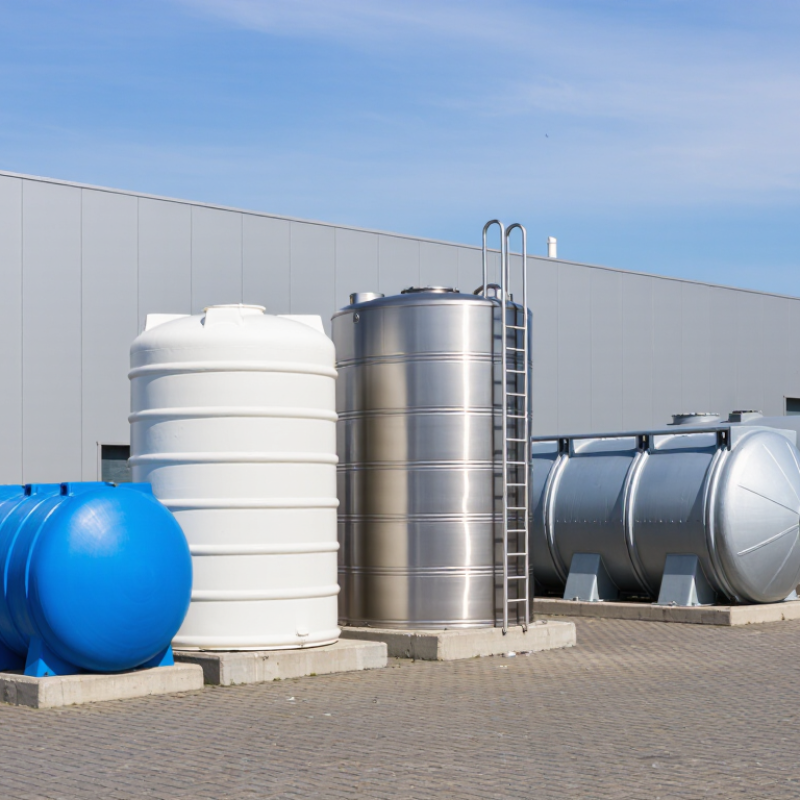
China’s large water storage tanks cover capacities from 1,000 liters to 10,000 m³. The right type depends on water quality, site access, climate, and maintenance plans. Polyethylene tanks suit smaller volumes, often from 1,000 to 50,000 liters. They resist corrosion and work well for farms, buildings, and emergency storage.

For larger projects, sectional GRP or FRP tanks commonly range from 10 m³ to 3,000 m³. Their panels can enter narrow sites and support easier replacement. Bolted steel tanks may reach 10,000 m³ and suit municipal, firefighting, and industrial applications. Welded steel offers strong structural performance, but transport and installation require careful planning. Concrete tanks remain useful underground, although construction takes longer. Capacity alone should not decide the purchase.

Tips: Confirm the usable volume, not only the advertised volume. Check internal coatings, foundation requirements, access openings, overflow pipes, and drainage points. Ask for material certificates and water-contact test records. Review wind, snow, seismic, and temperature conditions with a qualified engineer. I have found that small installation details often create the biggest maintenance problems. A perfect tank on a weak foundation is not a reliable system. Inspections should include joints, ladders, seals, corrosion, and sediment levels. Supplier experience matters, but independent technical review is still worthwhile.

Compare HDPE, FRP, Galvanized Steel, and Concrete Using Key Material Data

Large water storage tanks from China should be compared by material data, not appearance. HDPE tanks usually have a density near 0.94–0.97 g/cm³, according to Plastics Pipe Institute reference data. They are lightweight, corrosion-resistant, and suitable for many outdoor installations. However, sunlight and heat can increase aging risks. ASTM D1998 recommends rotationally molded polyethylene tanks with verified wall thickness and impact performance.

FRP tanks commonly use glass fibers in a resin matrix. Their density is often around 1.5–2.0 g/cm³, while their strength-to-weight ratio remains attractive. ASTM D3299 covers filament-wound fiberglass tanks, including structural and chemical-resistance requirements.

Galvanized steel offers higher stiffness, but coating quality matters. ASTM A653 identifies G90 coating as approximately 275 g/m² of zinc on both surfaces. Scratches can still expose steel to corrosion.

Concrete tanks are heavier and more permanent. ACI 318 design practice commonly uses concrete strengths around 20–40 MPa, but cracking control and reinforcement details decide service life.

Tips: Ask for third-party test reports, not only factory certificates. Check UV exposure, freeze-thaw cycles, weld quality, and foundation loads. For drinking water, verify NSF/ANSI 61 or an equivalent local approval. This point is easy to miss. I would also request a filled-tank inspection plan, because an impressive empty tank proves very little. Temperature, water chemistry, and installation errors can change the best material choice.

Assess Tank Safety with NSF/ANSI 61, ISO 9001, and GB Standards

Choosing large water storage tanks from China requires more than comparing capacity and steel thickness. NSF/ANSI 61 evaluates whether tank materials and components can release harmful substances into drinking water. Ask for the certification scope, not only a logo. It should cover the liner, fittings, gaskets, coatings, and any contact surface. The World Health Organization’s Guidelines for Drinking-water Quality emphasize controlling chemical migration from materials, especially during long storage. A tank holding 50,000 liters can hide small material problems for weeks.

ISO 9001 strengthens manufacturing control, but it does not certify drinking-water safety. The ISO Survey 2022 recorded more than 1.26 million ISO 9001 certificates worldwide, showing broad adoption, not automatic product quality. Request batch records, welding procedures, pressure tests, and corrective-action reports. China’s GB/T 17219 addresses sanitary safety for drinking-water distribution equipment and protective materials. Relevant GB 4806 requirements may also apply to plastic liners and food-contact materials. Confirm the current standard version and test laboratory.

Inspect the tank physically. Check smooth internal seams, clean welds, sealed manways, and a visible material identification code. Paperwork is not proof. A supplier may provide an ISO certificate for its factory while the tank uses an uncertified liner. That gap is easy to miss. I would also require migration testing using the actual water-contact materials, temperature, and storage conditions. Generic test results are convenient, but not always convincing.

What Are the Best Large Water Storage Tanks from China? — Assess Tank Safety with NSF/ANSI 61, ISO 9001, and GB Standards
Tank Category Typical Large-Tank Configuration Common Material Options Typical Application Relevant Safety or Quality Reference Evidence to Request from a Supplier Key Inspection Points
Sectional Stainless-Steel Tank Factory-made panels assembled on site; capacity and footprint are configurable. Stainless steel panels, commonly specified as 304 or 316L according to water chemistry and project requirements. Potable-water storage, municipal facilities, commercial buildings, hospitals, and industrial process water. NSF/ANSI 61 for applicable drinking-water-contact materials; ISO 9001 for the manufacturer’s quality-management system; applicable Chinese GB/T 17219 hygiene requirements. Valid material certificates, weld and gasket material information, drinking-water-contact test reports, ISO 9001 certificate scope, drawings, and leakage-test records. Panel flatness, weld quality, gasket compatibility, internal cleanliness, bolts, access covers, vents, overflow, drain, and anti-corrosion protection.
Glass-Fused-to-Steel Tank Bolted steel panels with a factory-applied glass coating; modular assembly allows large capacities. Carbon-steel substrate with a fused glass coating; elastomeric seals are used at panel joints. Potable water, fire-water reserve, wastewater, agricultural water, and industrial storage, subject to coating suitability. NSF/ANSI 61 may apply to components contacting drinking water; ISO 9001 supports production-control review; GB/T 17219 may apply when used for drinking water in China. Coating test results, adhesion and holiday-test records, panel traceability, gasket certificates, drinking-water-contact reports, and installation instructions. Chips, pinholes, exposed steel, coating damage at bolt holes, gasket compression, panel alignment, and site repair procedures.
Fusion-Welded Steel Tank Shop- or site-fabricated cylindrical or rectangular tank; dimensions are engineered for the project. Carbon steel or stainless steel with a suitable internal lining or coating when required. Large process-water storage, fire-water storage, raw-water storage, and selected potable-water projects. Applicable Chinese design, welding, coating, and hygiene requirements must be identified by the project; NSF/ANSI 61 is relevant to drinking-water-contact coatings and components. Design calculations, welding procedure qualifications, welder qualifications, non-destructive testing records, coating data sheets, and hydrostatic-test results. Weld continuity, corrosion allowance, coating thickness, internal surface condition, foundation settlement, manway sealing, and pressure or vacuum protection.
FRP/GRP Panel Tank Bolted composite panels assembled into rectangular tanks; modular dimensions and capacity are configurable. Glass-fiber-reinforced plastic panels with resin, food-grade liner, gaskets, and stainless or galvanized hardware as specified. Potable water, rainwater, fire-water reserve, and industrial water where chemical resistance is required. NSF/ANSI 61 may apply to resin, liner, gaskets, and other drinking-water-contact components; ISO 9001 concerns the quality system; GB/T 17219 is relevant for Chinese drinking-water hygiene evaluation. Resin and liner composition, fiber and panel test data, drinking-water-contact reports, UV and chemical-resistance information, ISO 9001 certificate scope, and assembly drawings. Panel cracks, delamination, resin odor, joint leakage, UV protection, bolt torque, internal supports, and compatibility with stored water.
HDPE or Rotomolded Polyethylene Tank Seamless molded tanks are generally used as individual units; multiple tanks can be connected for higher capacity. UV-stabilized polyethylene suitable for the intended water-contact and temperature conditions. Rainwater, potable water when certified, chemical-water storage, agriculture, and decentralized facilities. NSF/ANSI 61 may apply to potable-water-contact polyethylene and fittings; ISO 9001 evaluates the supplier’s quality-management system; applicable GB/T 17219 requirements should be confirmed for Chinese potable-water use. Resin identification, migration or extraction test reports, wall-thickness data, UV-stability information, fitting specifications, and dimensional inspection records. Wall thickness, deformation, inlet and outlet support, sunlight exposure, foundation levelness, fitting leakage, and tank anchoring.
Concrete or Reinforced-Concrete Tank Cast-in-place or precast construction; capacity and geometry are project-engineered. Reinforced concrete with a compatible waterproofing system or internal liner where needed. Municipal reservoirs, fire-water storage, raw-water storage, and large underground or ground-level facilities. Project-specific Chinese structural, waterproofing, and drinking-water hygiene requirements apply; NSF/ANSI 61 is generally considered for internal coatings, liners, sealants, and components rather than the concrete structure alone. Concrete mix design, waterproofing specifications, liner or coating certification, reinforcement records, curing records, and water-tightness test results. Cracks, joints, honeycombing, liner continuity, penetration seals, sediment accumulation, access safety, ventilation, and cleaning provisions.
Flexible Fabric Tank Factory-fabricated bladder or pillow tank installed on a prepared support surface; capacity is limited by site layout and fabrication design. Coated technical fabric, thermoplastic film, or reinforced elastomer selected for the stored liquid. Temporary or permanent non-pressurized storage, rainwater, emergency water, and selected potable-water applications. NSF/ANSI 61 may apply to the liquid-contact liner and fittings; ISO 9001 supports manufacturing-process review; Chinese drinking-water hygiene evidence should be verified for potable use. Fabric and liner composition, seam-strength test results, potable-water-contact reports, UV and temperature limits, repair procedures, and installation instructions. Support-surface condition, abrasion protection, seam integrity, overfilling prevention, inlet flow control, drainage, and exposure to heat or sharp objects.
Fire-Water Storage Tank Configuration may be sectional, welded, glass-fused, concrete, or other engineered construction; capacity depends on the required fire-water duration and flow. Steel, stainless steel, coated steel, composite, or concrete, selected according to the fire-protection design. Fire hydrant systems, sprinkler systems, industrial fire protection, and emergency reserve. Fire-protection design codes and local approval requirements take priority; NSF/ANSI 61 is relevant only when drinking-water contact is part of the design. Hydraulic calculations, certified drawings, material and coating data, filling and drain arrangements, level-monitoring details, and commissioning records. Effective usable volume, low-level alarm, suction vortex prevention, refill capacity, overflow, drain, access, and compatibility with fire pumps.
Potable-Water Storage Assessment Applicable to any tank type intended to store drinking water. Every wetted material must be identified, including tank walls, coatings, liners, gaskets, sealants, fittings, and internal supports. Drinking-water systems, treated-water storage, residential developments, healthcare facilities, and food-related operations. NSF/ANSI 61 addresses health effects of drinking-water-contact system components; GB/T 17219 addresses hygienic safety evaluation in China; GB 5749-2022 specifies Chinese drinking-water quality requirements. Current certificates or test reports that identify the exact product, material, formulation, size, intended use, and certificate scope; do not rely only on an unverified “food-grade” claim. Material traceability, odor and taste control, cleaning and disinfection plan, dead-leg reduction, temperature control, secure cover, screened vent, and prevention of backflow or contamination.
Supplier Quality-System Review Applies to the manufacturer and its production, inspection, purchasing, and corrective-action processes. Not a tank material standard; it evaluates the quality-management system used to control production. Useful for comparing manufacturers of stainless-steel, coated-steel, composite, polyethylene, concrete, and flexible tanks. ISO 9001 certification should be checked for validity, issuing body, covered manufacturing site, and scope relevant to tank production. Certificate number, validity date, legal entity, manufacturing-site address, certification scope, audit status, inspection plan, and quality-control records for the supplied tank. Incoming-material inspection, batch traceability, welding or molding controls, dimensional checks, final inspection, nonconformance records, and documented corrective actions.
Buyer’s verification rule: NSF/ANSI 61 and GB/T 17219 relate primarily to health and hygienic suitability of drinking-water-contact materials and components, while ISO 9001 evaluates the supplier’s quality-management system. Neither certification alone proves tank capacity, structural adequacy, leakage resistance, installation quality, or compliance with every local building and fire code. Request project-specific drawings, calculations, test records, and certificates whose scope matches the exact tank, materials, and intended water use.

Calculate Storage Size from Daily Demand, Fire Flow, and a 10% Reserve

What Are the Best Large Water Storage Tanks from China?

Calculate Storage Size from Daily Demand, Fire Flow, and a 10% Reserve

Tank selection should begin with demand, not catalogue capacity. USGS Circular 1441 reported average U.S. domestic use of 82 gallons per person daily in 2015. Use this only as a benchmark. A hotel, factory, or remote site needs metered data, occupancy records, and seasonal demand checks. A neat formula can still be wrong.

Use this planning equation: required storage equals daily demand plus fire-flow volume, multiplied by 1.10. Fire-flow volume equals approved flow rate multiplied by required duration. For example, 120 occupants at 82 gallons daily need 9,840 gallons. If the fire authority requires 1,000 gallons per minute for two hours, fire storage equals 120,000 gallons. The calculated total is 142,824 gallons, or about 541 cubic metres. Confirm the fire-flow requirement with the authority having jurisdiction. NFPA 22 addresses water tanks for private fire protection, but local hydraulic approvals still control.

For large tanks sourced from China, request drawings, steel certificates, coating specifications, weld inspection records, and seismic calculations. Check usable volume, not only nominal volume. Dead storage matters. Access ladders, overflow routing, drain points, and internal inspection space also affect operation. A tank may look oversized yet fail during a low-level fire event. Review pump suction levels carefully. That detail is often missed. The final design should be checked by a qualified engineer against local building, fire, and water-quality requirements.

Evaluate Suppliers by Wall Thickness, Leak Testing, Warranty, and Service Life

What Are the Best Large Water Storage Tanks from China?

A dependable tank starts with verified wall thickness, not attractive catalog photos. Ask for thickness data from the shell, roof, base, and reinforced fittings. Different sections face different loads. Thicker is not always better. Poor welding or uneven supports can still cause early failure. I have seen tanks with strong panels develop leaks around outlet flanges. Request material certificates, weld inspection records, and clear production drawings before ordering.

Leak testing deserves practical attention. Suppliers should describe hydrostatic testing, vacuum checks, or another suitable inspection method. Ask whether every tank is tested, or only a sample from each batch. Photos and signed reports add useful evidence, although paperwork can still miss a weak joint. My first comparison focused too much on steel thickness. The testing process mattered more than expected. A supplier should also explain repair procedures, replacement parts, and response times after delivery.

Tips: Confirm the warranty in writing. Check coverage for corrosion, leaks, coating failure, and structural damage. Ask when the warranty begins. Also request a realistic service-life estimate under your water quality, weather, and cleaning schedule. A long warranty does not guarantee long service life. Proper foundations, regular inspections, and careful bolt tightening remain essential. Local technicians may need clear manuals and remote support, especially when the tank is installed far from the factory.